
Finding new customers is one of the biggest challenges for many contractors. A company may have years of experience, skilled tradespeople, strong project results, and satisfied customers, but those strengths do not automatically create a steady flow of new enquiries.
Homeowners now have more ways to research contractors than ever. They can search Google, compare websites, read reviews, look at project photos, check social media, and request quotes before deciding who to contact.
For contractors, this means that having a good online presence is no longer simply a branding exercise. It can become an important part of the sales process.
This is where Contractor Lead Generation Services can help.
However, choosing a lead generation provider should not be based only on the number of leads promised. A high number of poor-quality enquiries can waste time, create unnecessary follow-up work, and make marketing costs harder to justify.
The better question is:
What should a contractor look for before choosing a lead generation service?
The answer involves much more than lead volume. Contractors should consider lead quality, targeting, service-area coverage, project type, transparency, reporting, follow-up, and the provider’s understanding of the renovation industry.
This guide explains what to look for and how contractors can build a more reliable approach to generating renovation opportunities.
What Are Contractor Lead Generation Services?
Contractor Lead Generation Services in Mississauga are marketing services designed to help contractors attract potential customers who may be interested in their services.
Depending on the provider, lead generation can involve several channels, including search marketing, paid advertising, landing pages, content marketing, social media, local SEO, and targeted campaigns.
A lead may be a homeowner who:
- Requests an estimate
- Calls a contractor
- Completes an online enquiry form
- Requests a consultation
- Asks about a renovation service
- Shows interest in a specific project
The important point is that a lead should have some connection to the contractor’s actual service offering.
For example, a contractor specialising in luxury home renovation needs a different audience from a contractor focused on small repairs or maintenance work.
Likewise, a company that primarily handles custom renovation projects may need a different marketing message from a company that offers standardised renovation packages.
Good lead generation starts with understanding these differences.
Why Lead Quality Matters More Than Lead Volume
One of the easiest mistakes to make when comparing Contractor Lead Generation Services is focusing only on the number of leads.
Suppose one provider delivers 100 enquiries, but most are outside your service area or are looking for work you do not offer.
Another provider delivers 30 enquiries, but 15 are from homeowners looking for exactly the type of renovation your company specialises in.
The second group may be much more valuable.
This is why contractors should evaluate lead generation based on the quality and relevance of opportunities rather than volume alone.
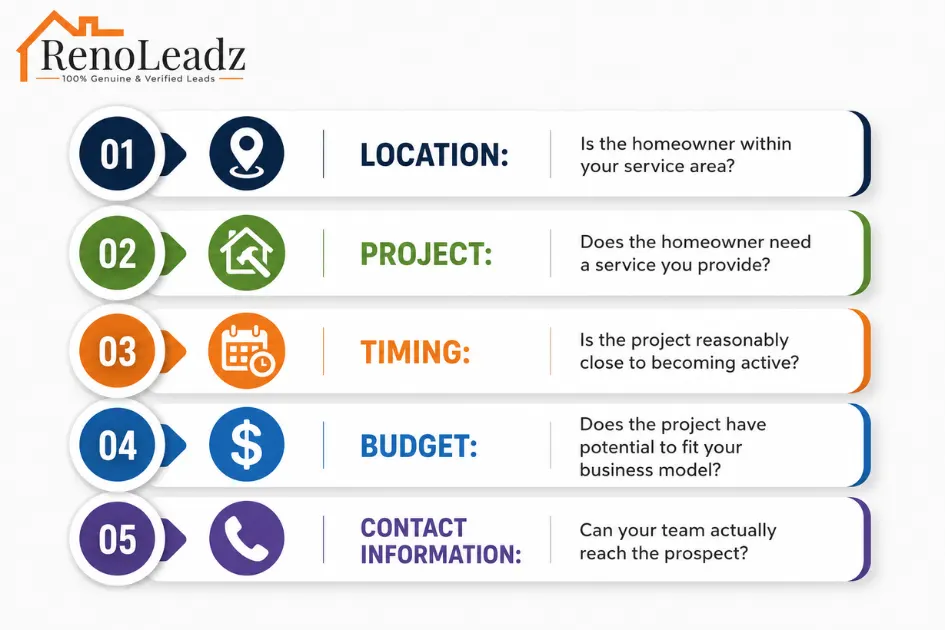
A useful lead should ideally match important criteria such as:
Location: Is the homeowner within your service area?
Project: Does the homeowner need a service you provide?
Timing: Is the project reasonably close to becoming active?
Budget: Does the project have potential to fit your business model?
Contact information: Can your team actually reach the prospect?
The exact qualification process will vary by business, but the principle remains the same: relevant leads are more useful than large numbers of irrelevant enquiries.
1. Look for Industry-Specific Experience
The first thing to consider when comparing Contractor Lead Generation Services is whether the provider understands the contractor and renovation market.
Marketing a contractor is different from marketing a general consumer product.
A homeowner planning a major renovation may spend weeks or months researching their options. They may compare project photos, reviews, service pages, pricing information, and contractor experience before making contact.
A lead generation company should understand this longer decision process.
Industry knowledge is especially important for specialised services.
For example, marketing for a company focused on:
- Luxury home renovation
- Kitchen renovations
- Basement renovations
- Home additions
- Bathroom renovations
- Whole-home renovations
- Custom renovation projects
requires an understanding of the customers and decisions involved in each service.
Before choosing a provider, ask whether they have experience generating leads for contractors and renovation businesses.
2. Check Where the Leads Come From
A contractor should understand how a lead generation company actually attracts potential customers.
Do not be afraid to ask where the leads originate.
Depending on the provider, potential customers may come through organic search, paid search, social media advertising, landing pages, local campaigns, content, or other marketing channels.
The source matters because different channels can attract people at different stages of the buying journey.
For example, someone searching Google for a renovation contractor may have stronger immediate intent than someone who simply sees a renovation image while browsing social media.
That does not mean social media leads have no value. It means contractors should understand the role each channel plays.
A transparent provider should be able to explain its general acquisition strategy without making unrealistic promises.
3. Understand Lead Quality and Qualification
Before signing up for Contractor Lead Generation Services, ask how leads are evaluated.
A provider should be able to explain what information is collected from a potential customer and how that information is passed to the contractor.
Depending on the service, useful information could include the homeowner’s location, project type, contact details, and basic project requirements.
For renovation businesses, project information can be particularly important.
A contractor specialising in custom home renovation projects may need to know whether the homeowner is looking for a complete renovation, a single-room upgrade, or a more specialised service.
The more relevant information a contractor receives, the easier it can be to determine the next step.
However, contractors should also be careful about unrealistic qualification promises.
No lead generation system can guarantee that every lead will become a paying customer.
Lead generation creates opportunities. The contractor’s sales process, pricing, communication, project fit, and follow-up all influence the final outcome.
4. Make Sure the Service Matches Your Target Market
Not every contractor wants the same type of customer.
A renovation company might focus on high-value projects in specific communities. Another company may focus on mid-range renovations across a wider service area.
Your lead generation strategy should reflect that difference.
For example, luxury home renovation marketing may need to focus more heavily on quality, design, craftsmanship, experience, project photography, and trust.
A contractor handling smaller renovation projects may need a different message focused on accessibility, speed, service range, and value.
Before choosing a provider, define your ideal customer.
Consider:
- Where do you want to work?
- What project types do you prefer?
- What project size fits your company?
- How many projects can your team handle?
- What type of homeowner is the best fit?
- Which services have the strongest margins?
This information can help your marketing provider target opportunities more effectively.
5. Look for Clear Reporting and Tracking
Good marketing decisions require data.
A contractor should be able to understand where enquiries are coming from and what happens to those enquiries after they arrive.
Useful measurements can include:
- Number of leads
- Qualified leads
- Cost per lead
- Consultation bookings
- Estimates
- Conversion rate
- Projects won
- Revenue generated
For example, imagine a campaign generates 40 leads in a month.
That number sounds positive until you discover that only three were qualified.
Now imagine another campaign generates 20 leads and eight become serious sales opportunities.
The second campaign may deserve more attention.
This is why marketing for renovation companies should be measured beyond traffic and clicks.
A good reporting process helps contractors identify which activities are contributing to real business opportunities.
6. Evaluate the Follow-Up Process
Generating a lead does not automatically create a customer.
Follow-up matters.
When a homeowner contacts a contractor, they may also contact two or three other businesses. A slow response can give competitors an opportunity to move ahead.
Contractors should therefore have a clear process for responding to enquiries.
The process might include an initial response, a phone conversation, a project qualification step, a consultation, and an estimate.
The exact process depends on the contractor, but the important thing is consistency.
A good lead generation provider should also make it easy to understand when and how leads are delivered.
If your team does not have the capacity to respond promptly, generating more leads may not solve the underlying business problem.
Sometimes improving the sales process is just as important as increasing lead volume.
7. Consider Exclusive vs. Shared Leads
Another important question is whether leads are exclusive or shared leads with multiple contractors.
With a shared lead, the homeowner’s information may be provided to several businesses.
That can create more competition for the same opportunity.
With an exclusive lead model, the opportunity may be supplied to one contractor, depending on the provider’s terms.
Neither model should be judged only by its label. Contractors should understand exactly how the provider defines exclusivity and what is included in the service.
Ask:
- Is the lead shared with other contractors?
- How many contractors receive the same enquiry?
- What geographic area is covered?
- What type of project qualifies?
- What happens if a lead is invalid?
Clear answers can help you compare services more fairly.
8. Look for a Strategy That Supports Long-Term Growth

Lead generation should not always be viewed as a short-term transaction.
A strong marketing strategy can also help build your company’s long-term visibility.
This is where SEO and content become important.
For example, a renovation company could build content around topics such as:
Luxury Home Renovation: What Homeowners Should Know Before Starting
- How to Plan Custom Renovation Projects
- How to Choose a Renovation Contractor
- Questions to Ask Before Starting a Home Renovation
- How Much Does a Home Renovation Cost?
These articles can answer questions homeowners ask during the research stage.
Over time, this content can support service pages, build topical relevance, and create additional opportunities for organic search traffic.
Google’s current guidance emphasises helpful, reliable, people-first content rather than content written primarily to manipulate rankings. Google also recommends original information, clear organisation, accuracy, and a satisfying experience for readers.
That principle is particularly important for renovation companies because homeowners are making decisions involving their homes and significant budgets.
How Lead Generation Works for Luxury Home Renovation
Luxury home renovation requires a more focused marketing approach.
A homeowner considering a high-value renovation may be looking for more than a contractor who can complete the work. They may want experience, design knowledge, project management, craftsmanship, communication, and confidence that the contractor can manage a complex project.
Marketing should therefore communicate those strengths.
A luxury renovation website can build trust by showing:
- High-quality project photography
- Detailed project descriptions
- Customer testimonials
- Contractor experience
- Design and construction capabilities
- Clear service areas
- A professional consultation process
The content should also answer questions that high-value customers may have before contacting a contractor.
For example, an article about planning a luxury renovation could explain how design decisions, materials, timelines, permits, project management, and budgets can affect the project.
This type of content demonstrates expertise without turning every paragraph into a sales pitch.
Marketing for Renovation Companies: What Should Be Included?
Effective marketing for renovation companies usually involves multiple connected activities rather than one isolated tactic.
A contractor’s marketing system may include SEO, local search, content marketing, paid advertising, social media, landing pages, reviews, email follow-up, and lead tracking.
Each channel has a different role.
SEO can help build long-term visibility.
Paid search can capture active demand.
Social media can showcase projects and build awareness.
Content can answer homeowner questions.
Reviews can support trust.
Landing pages can turn relevant traffic into enquiries.
Analytics can show which activities are contributing to business results.
The strongest strategy is one where these elements work together.
Custom Renovation Projects Need Better Qualification
Custom renovation projects can be more complex than standard services.
The homeowner may have a broad vision rather than a simple request. They may want changes to the layout, multiple rooms, premium materials, structural modifications, or a combination of design and construction services.
This means lead qualification becomes particularly important.
A contractor may want to understand the homeowner’s goals, location, project scope, expected timeline, and other basic requirements before investing significant time in an estimate.
The lead generation process should support this.
A well-designed enquiry form can ask relevant questions without becoming so long that homeowners abandon it.
The objective is to collect enough information to start a useful conversation.
Questions to Ask Before Choosing Contractor Lead Generation Services
Before signing a contract with a provider, ask practical questions.
Where do your leads come from?
Understand the marketing channels behind the service.
What type of contractors do you work with?
Look for experience relevant to your business.
How do you define a qualified lead?
Make sure the definition matches your expectations.
Are leads exclusive or shared?
Understand exactly how the distribution model works.
Which locations can you target?
Your service area should match your business goals.
What information comes with each lead?
Know what your sales team will receive.
How is performance measured?
Look for meaningful business metrics rather than vanity numbers.
How quickly are leads delivered?
Timely delivery can matter when homeowners are comparing contractors.
What happens when a lead is invalid?
Understand the provider’s policy before you start.
How can the campaign be improved over time?
A good strategy should allow for testing and optimisation.
Common Mistakes Contractors Should Avoid
Choosing the Cheapest Service
The lowest cost per lead does not necessarily mean the best value.
A cheap lead that never becomes a project can cost more in time and resources than a higher-value qualified opportunity.
Focusing Only on Lead Volume
More leads are not automatically better.
Quality, relevance, conversion, and project value matter.
Ignoring Your Website
Even a strong advertising campaign can struggle if visitors arrive at a confusing or outdated website.
Your website should clearly explain what you do and make the next step easy.
Using Generic Content
Home renovation customers have specific questions.
Useful, original content can demonstrate expertise better than generic marketing language.
Failing to Track Results
Without tracking, it is difficult to know which channels are actually producing customers.
Conclusion
Choosing the right Contractor Lead Generation Services is about more than finding a company that promises a large number of enquiries.
Contractors should look at the complete picture.
Where do the leads come from? Are they relevant to your services? Do they match your target locations? Are they exclusive or shared? How are they tracked? What information is provided? And most importantly, can your business turn those opportunities into real projects?
These questions become even more important for specialised businesses working in luxury home renovation or custom renovation projects, where project value, customer expectations, and sales cycles can be significantly different.
At RenoLeadz, the focus is on helping renovation and home improvement businesses create stronger opportunities through targeted lead generation.
The best approach is not to chase every possible enquiry. It is to build a system that connects the right homeowners with the right contractors.
When combined with strong marketing for renovation companies, useful content, local visibility, effective follow-up, and clear performance tracking, lead generation can become a more dependable part of a contractor’s growth strategy.
RenoLeadz can help contractors build a more focused path from homeowner search to renovation opportunity.
Frequently Asked Questions
What are Contractor Lead Generation Services?
Contractor Lead Generation Services are marketing services designed to help contractors attract potential customers who are interested in renovation, construction, remodelling, or related services.
How do I choose the best lead generation service for my contracting business?
Start by looking at industry experience, lead sources, lead qualification, service-area targeting, reporting, pricing, exclusivity, and the provider’s ability to support your specific project types.
Are Contractor Lead Generation Services worth it?
They can be valuable when the leads are relevant to your business and your team has a strong process for responding to and converting enquiries. Measure results based on qualified opportunities and completed projects, not lead volume alone.
What is important when marketing luxury home renovation?
Luxury home renovation marketing should communicate experience, craftsmanship, trust, project quality, and the ability to manage complex projects. High-quality visuals and detailed project information can be especially useful.
How can contractors generate leads for custom renovation projects?
Contractors can combine SEO, local search, paid advertising, useful content, social media, project showcases, landing pages, and targeted lead generation campaigns. Qualification is particularly important when projects are complex or high value.