
For a general contractor, getting a steady flow of new projects is rarely as simple as putting up a website and waiting for the phone to ring. Homeowners have more ways than ever to compare contractors, request estimates, and research renovation companies before making a decision.
That is why lead generation has become an important part of running a renovation business.
But one question comes up quickly: How much do contractor leads cost in Canada?
There is no single price that applies to every contractor or every project. A lead for a small painting job will have a very different value from a homeowner looking for a complete basement renovation or a large home addition.
The price can also change based on the location, project value, competition, lead quality, and whether the lead is shared with other contractors or provided exclusively.
For Canadian contractors, the more important question is not simply what a lead costs. It is whether that lead has a realistic chance of becoming a profitable project.
What Is a Contractor Lead?
A contractor lead is a potential customer who has expressed interest in hiring a contractor for a specific project.
Depending on the lead-generation source, the homeowner may submit a form, request a quote, make a phone call, or provide information about the renovation they are planning.
A useful lead usually contains enough information for the contractor to understand the opportunity.
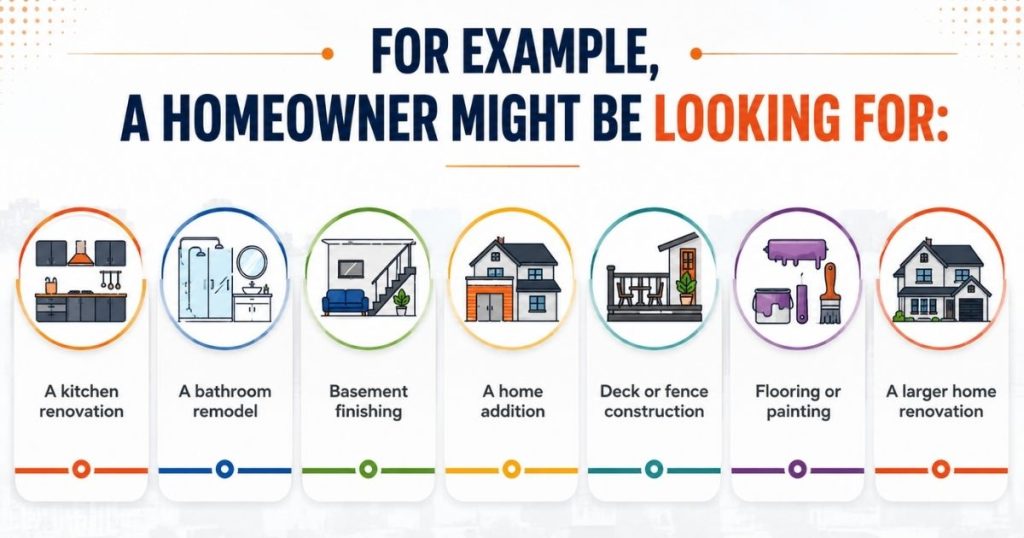
For example, a homeowner might be looking for:
- A kitchen renovation
- A bathroom remodel
- Basement finishing
- A home addition
- Deck or fence construction
- Flooring or painting
- A larger home renovation
The quality of the information matters because contractors spend time and money following up with these prospects.
How Much Do Contractor Leads Cost in Canada?
There is no standard national rate for contractor leads.
In practice, pricing can range from relatively inexpensive leads for smaller services to significantly higher costs for complex renovation projects. High-value projects generally command higher lead prices because the potential revenue from a successful project is much greater.
Several factors determine the final cost.
1. Type of Renovation Project
Project size is one of the biggest factors affecting lead pricing.
A homeowner looking for a small repair may have a relatively low project value. A homeowner planning a major kitchen renovation, basement conversion, or whole-home remodel represents a much larger potential contract.
For that reason, contractors should evaluate lead costs in relation to project value, rather than looking at the price of the lead by itself.
2. Location
The Canadian renovation market varies significantly from one area to another.
Lead costs can be affected by:
- Local demand for renovation work
- Number of competing contractors
- Average project values
- Population and household income
- Availability of qualified contractors
A home renovation lead in Toronto or the Greater Toronto Area may have different economics from a similar lead in a smaller Canadian market.
This is one reason contractors should look at their own market instead of relying entirely on industry-wide averages.
3. Lead Quality
Not every enquiry is equally valuable.
A homeowner who has a defined project, realistic expectations, a suitable budget, and a reasonable timeline is generally more valuable than someone who is only collecting rough estimates.
Good contractor leads Canada campaigns should focus on attracting homeowners who are genuinely considering a project.
4. Exclusive vs. Shared Leads
The way a lead is distributed can have a major impact on its value Exclusive vs. Shared Leads.
With a shared lead, multiple contractors may receive the same homeowner enquiry. This can create more competition and make it harder to secure the project.
An exclusive lead is generally provided to one contractor, giving that contractor an opportunity to speak with the homeowner before competing contractors enter the conversation.
Exclusive leads can cost more, but the additional cost may make sense when the project value is high.
Why the Cheapest Lead Is Not Always the Best Lead
It is tempting to compare lead providers solely on price.
For example, Contractor A might find leads for $X while Contractor B pays more per enquiry. At first glance, the cheaper option appears better.
But that comparison misses an important part of the equation: conversion rate.
Suppose a contractor receives 20 inexpensive enquiries but only one becomes a project. Another contractor may receive 10 higher-quality enquiries and close two projects.
The second contractor paid more per lead but potentially generated better overall returns.
This is why experienced renovation companies look beyond the initial lead price.
They track:
- Number of leads received
- Number of leads contacted
- Qualified opportunities
- Estimates booked
- Projects won
- Revenue generated
- Cost per acquired customer
That information gives the contractor a much clearer picture of what their leads are actually worth.
What Affects the Cost of Renovation Leads?
The Canadian renovation industry covers a wide range of services, so lead pricing can vary considerably.
A high-value renovation lead may require more marketing investment because the potential customer is looking for a specialized contractor and the competition can be stronger.
For example, a homeowner searching for a complete home renovation may have a very different customer journey from someone looking for a simple painting service.
The project itself can influence the economics of lead generation.
Common factors include:
- Project complexity
- Estimated renovation budget
- Local competition
- Customer location
- Contractor specialization
- Lead exclusivity
- Marketing channel
- Homeowner intent
Understanding these factors helps contractors decide which opportunities are worth pursuing.
Different Ways Contractors Generate Leads
Contractors in Canada use several methods to find new customers. Each approach has advantages and disadvantages.
Organic Search and Local SEO
A strong Google presence can generate leads without paying for every individual enquiry.
A contractor may build visibility through a website, service pages, local content, reviews, and a well-maintained Google Business Profile.
The challenge is that SEO usually takes time. Contractors need to build authority before organic traffic becomes a reliable source of enquiries.
Google Ads
Paid search can put a contractor in front of homeowners actively searching for renovation services.
The advantage is intent. Someone searching for a “basement renovation contractor” may already be looking for a company to contact.
However, advertising costs can become significant in competitive markets, particularly for valuable renovation keywords.
Social Media
Facebook and Instagram can help renovation companies showcase completed projects, before-and-after transformations, customer reviews, and their workmanship.
Social media can support brand awareness and generate enquiries, although results can vary considerably depending on targeting and campaign quality.
Referrals
Referrals remain one of the most valuable sources of business for many contractors.
A recommendation from a previous customer can provide a level of trust that a cold enquiry does not.
The downside is that referrals can be difficult to predict. A contractor may have a strong month followed by a slower period.
Pay-Per-Lead Services
Pay-per-lead services provide another option for contractors who want to purchase individual customer opportunities instead of committing to a large monthly advertising budget.
The attraction is straightforward: contractors can focus their spending on potential customers rather than paying only for exposure.
The key is making sure the leads match the contractor’s service area, project type, and customer requirements.
How Should Contractors Calculate Lead ROI?
Instead of asking only, How much does this lead cost?, ask:
How much revenue does each qualified lead generate for my business?
Imagine a contractor purchases 10 leads at an average cost of $100 per lead. The total lead investment is $1,000.
If one of those leads turns into a $20,000 renovation project, the economics look very different from a situation where none of the leads become customers.
The contractor should also consider gross profit, not just project revenue.
A simple way to evaluate performance is to track the complete journey from lead to customer.
Example
10 leads → 5 qualified opportunities → 2 estimates → 1 signed project
That information is much more useful than simply knowing that 10 leads were purchased.
Over time, contractors can identify which project types and lead sources produce their strongest results.
How to Get Better Results From Contractor Leads
Buying a lead is only the beginning.
The contractor’s response can have a major impact on whether the opportunity turns into an appointment.
Homeowners often contact several companies when planning a renovation. A slow response can give another contractor the opportunity to start the conversation first.
When a new lead arrives, contractors should try to:
- Respond quickly
- Confirm the project details
- Ask useful qualification questions
- Discuss the homeowner’s timeline
- Understand the scope of work
- Arrange the next step
Professional communication matters just as much as the original marketing.
Questions to Ask Before Buying Leads
Before signing up with any lead-generation provider, contractors should understand exactly what they are paying for.
Ask whether the leads are exclusive or shared and whether the provider verifies the information before sending it.
It is also worth asking about the service area and project categories covered.
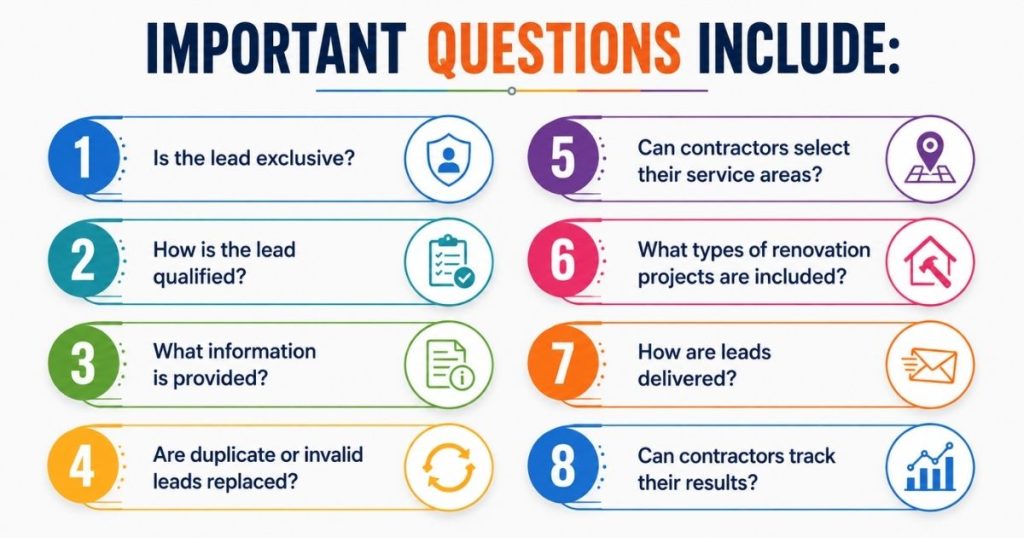
Important questions include:
- Is the lead exclusive?
- How is the lead qualified?
- What information is provided?
- Are duplicate or invalid leads replaced?
- Can contractors select their service areas?
- What types of renovation projects are included?
- How are leads delivered?
- Can contractors track their results?
Clear answers to these questions can help prevent unpleasant surprises later.
Are More Expensive Leads Worth It?
Sometimes, yes.
A higher-priced lead can make sense if it represents a larger project, has stronger homeowner intent, or is exclusive to one contractor.
For example, paying more for a qualified homeowner planning a major renovation may be more attractive than purchasing several low-cost enquiries from people who are not ready to hire.
The right benchmark is therefore not simply cost per lead.
It is cost per qualified opportunity and cost per acquired customer.
That distinction can make a significant difference when a renovation company is deciding where to invest its marketing budget.
How RenoLeadz Helps Canadian Contractors Find Renovation Opportunities
RenoLeadz is built around the needs of residential renovation contractors looking for homeowners who are actively planning projects.
Instead of focusing only on website traffic or advertising impressions, the goal is to connect contractors with relevant renovation opportunities.
For contractors, that means the conversation can start with the actual project rather than an anonymous website visitor.
RenoLeadz can be particularly relevant for businesses offering services such as kitchen renovations, bathroom renovations, basement projects, additions, custom renovations, and other residential construction work.
The most important consideration remains the same: a lead should fit the contractor’s services, location, and ability to take on the project.
Final Thoughts
So, how much do contractor leads cost in Canada?
The answer depends on the project, location, lead quality, competition, marketing channel, and whether the opportunity is exclusive or shared.
There is no universal price that makes a lead good or bad.
For Canadian general contractors and renovation companies, the better approach is to measure the entire customer journey from the initial enquiry to the signed contract.
A lead that costs more but consistently produces profitable renovation projects may be far more valuable than a cheap lead that rarely converts.
The goal should not be to find the cheapest contractor leads Canada has to offer.
The goal should be to find qualified opportunities that can produce profitable, long-term customers.
For a renovation company looking to grow consistently, that distinction is what makes lead generation an investment rather than simply another marketing expense.
Frequently Asked Questions
How much should a contractor pay for a lead?
There is no universal price. Lead costs depend on the project type, location, customer intent, competition, and whether the lead is exclusive. Contractors should compare lead costs against their average project value and conversion rate.
Are exclusive contractor leads worth more?
They can be. An exclusive lead gives a contractor an opportunity to speak with the homeowner without competing against several companies receiving the same enquiry. The value depends on lead quality and project potential.
What are the best leads for renovation companies?
The best leads are generally inquiries from homeowners with a defined project, realistic expectations, a suitable service area, and a genuine intention to hire a contractor.
How can contractors reduce their cost per customer?
Contractors can improve their results by targeting the right project types, responding quickly, qualifying enquiries, tracking conversions, and focusing marketing spending on sources that consistently generate profitable projects.
What matters more: lead price or lead quality?
Lead quality generally matters more. A low-cost enquiry has little value if the homeowner is not qualified or ready to hire. Contractors should measure the cost of acquiring an actual customer rather than focusing only on the initial lead price.