
A homeowner submits a renovation enquiry.
The contractor receives the notification.
Then nothing happens for several hours.
By the time the contractor calls back, the homeowner may already be speaking with two or three other companies.
This situation is common in competitive renovation markets. Generating an enquiry is important, but what happens immediately after the enquiry can determine whether that opportunity becomes a consultation, estimate, and project or disappears.
This is why closing Home Renovation Leads requires more than simply having a good website or running an advertising campaign.
Contractors need a process.
They need to respond quickly, understand what the homeowner wants, ask the right questions, communicate clearly, demonstrate credibility, and make the next step easy.
The goal is not to pressure a homeowner into making a decision.
The goal is to make it easy for a serious homeowner to move forward with a contractor they trust.
For renovation companies, this is especially important because projects can involve significant budgets and long decision-making periods. A homeowner considering a basement renovation may need time to understand the scope, while someone planning a luxury home renovation may have a detailed design process before construction begins.
In both situations, the contractor who communicates professionally from the first interaction has an opportunity to stand apart.
This guide explains how contractors can improve their process for handling Home Renovation Leads and reduce the chance of losing good opportunities to competitors.
Why Speed Matters When a Renovation Lead Arrives
When a homeowner contacts a contractor, their interest is usually highest at that moment.
They may have just finished searching Google, comparing renovation companies, looking at project photos, or asking for an estimate.
If the contractor does not respond, the homeowner may continue searching.
That does not mean every lead needs an immediate sales pitch. It means the contractor should acknowledge the enquiry and show that someone is paying attention.
A simple first response can be enough:
Thanks for reaching out about your renovation project. We received your enquiry and would be happy to learn more about what you’re planning.
That message confirms that the enquiry was received and creates a professional first impression.
Speed alone will not close a project. A fast response combined with poor communication will not create trust.
The ideal process is:
Fast response → Helpful conversation → Qualification → Consultation → Estimate → Follow-up → Project
What Makes a Home Renovation Lead Valuable?
Not every inquiry has the same potential.
A useful lead should have a reasonable fit with your business.
For example, a contractor may specialise in larger residential renovations but receive an enquiry for a very small repair. Another contractor may focus on basement renovations but receive a lead for a commercial project.
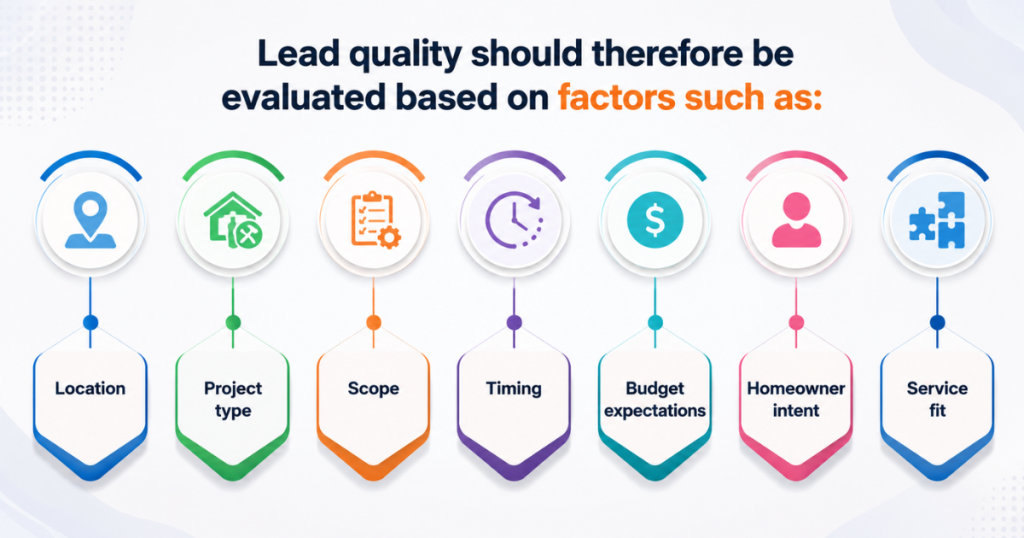
Lead quality should therefore be evaluated based on factors such as:
- Location
- Project type
- Scope
- Timing
- Budget expectations
- Homeowner intent
- Service fit
A strong Home Renovation Leads strategy should focus on relevance rather than simply increasing lead volume.
This is also why contractors should track lead quality after the enquiry is received.
If a marketing campaign produces many enquiries but very few qualified consultations, the problem may not be the sales team. The campaign may be attracting the wrong audience.
Strategy 1: Respond While the Lead Is Still Engaged
One of the simplest ways to improve lead conversion is to reduce unnecessary delays.
When someone submits a form, call, or online enquiry, acknowledge it as soon as reasonably possible.
A fast response does not have to be complicated.
The first conversation should focus on understanding the project rather than immediately trying to sell.
For example:
- What are you hoping to change in your home?
- Which part of the renovation are you planning?
- Have you already started working with a designer or contractor?
These questions encourage the homeowner to explain the project.
The contractor can then decide what the appropriate next step should be.
For companies using lead services for contractors in Toronto, the same principle applies. The value of receiving a relevant lead can be reduced if there is no consistent process for responding to it.
Strategy 2: Understand the Homeowner's Project
Homeowners do not necessarily think about renovations in construction terminology.
A homeowner might say:
We want to open up the kitchen.
What they may actually need is a structural change, electrical work, new flooring, cabinetry, lighting, plumbing, or a combination of several services.
The contractor’s job during the initial conversation is to understand the problem behind the request.
Ask about:
- What they want to change
- Why they want to renovate
- The approximate project scope
- Their preferred timing
- The property’s location
- Whether plans already exist
- Whether permits or approvals may be required
Do not overwhelm the homeowner with technical questions during the first conversation.
The purpose is to determine whether the project is a potential fit and what information is needed for the next stage.
Strategy 3: Qualify the Lead Without Making It Feel Like an Interview
Qualification is important, but the conversation should still feel natural.
A contractor does not need to ask every question at once.
Start with the basics.
For example:
Location: Where is the property?
Project: What renovation are you considering?
Timing: When would you ideally like to start?
Scope: What areas of the home are involved?
Budget: Have you established an approximate investment range?
The budget conversation can sometimes feel uncomfortable.
However, avoiding the topic completely can create problems later.
Instead of asking, “What is your budget?” in a blunt way, explain why the information is useful.
For example:
Having an approximate investment range helps us understand which options may be realistic for your project.
That makes the conversation about planning rather than judgement.
Strategy 4: Build Trust Before Talking About Price
Price matters, but homeowners often want to know whether they can trust the contractor before they focus entirely on cost.
Renovations take place inside someone’s home. Homeowners are trusting the contractor with their property, money, schedule, and expectations.
Trust can be built through clear communication and evidence of previous work.
A contractor’s website should ideally demonstrate:
- Relevant project experience
- Quality photographs
- Customer reviews
- Clear service information
- Professional credentials where applicable
- A transparent renovation process
- Useful educational content
For custom renovation projects in Toronto, this becomes even more important.
A custom project often requires more planning and communication than a standard renovation.
Homeowners want to know that the contractor can understand their ideas and turn them into a realistic construction plan.
Strategy 5: Make Booking a Consultation Easy
Once a lead appears qualified, make the next step simple.
Do not make the homeowner search through your website to figure out how to book an appointment.
Use clear calls to action such as:
- Book a Renovation Consultation
- Discuss Your Project
- Request a Project Assessment
- Schedule an Estimate
If possible, provide clear scheduling options.
The easier it is for a qualified homeowner to move from enquiry to consultation, the less opportunity there is for them to lose momentum or start another conversation elsewhere.
The consultation itself should have a purpose.
Use it to understand the property, discuss goals, identify potential challenges, and explain the next stage.
Strategy 6: Follow Up With a Clear Process
Not every renovation lead will be ready to hire immediately.
A homeowner may need several weeks to compare contractors, finalise a design, arrange financing, or discuss the project with family members.
That does not necessarily mean the lead is lost.
This is where structured follow-up becomes important.
Instead of sending repeated messages saying, “Just checking in,” provide something useful.
For example:
We’ve reviewed the information you provided. If you’re still planning the renovation, we can discuss the next steps and what would be needed to prepare an estimate.
Follow-up should be professional rather than aggressive.
A simple process might include:
Initial response → First conversation → Consultation → Estimate → Follow-up → Decision
The exact timing should depend on the project and the homeowner.
A large luxury home renovation in Canada may require a much longer decision process than a straightforward renovation.
Strategy 7: Use a CRM and Lead Tracking System
As a renovation business grows, managing leads through email inboxes and handwritten notes becomes difficult.
A CRM or structured lead management system can help contractors track where each opportunity stands.
Useful stages might include:
New Lead → Contacted → Qualified → Consultation Booked → Estimate Sent → Follow-Up → Won/Lost
This gives the business a clearer picture of its pipeline.
It also prevents leads from being forgotten.
For contractors using Contractor Lead Generation Services in Mississauga, tracking should begin as soon as the lead arrives.
Record information such as the project type, location, lead source, response time, consultation outcome, estimate value, and final result.
Over time, this information can show which lead sources produce the best opportunities.
Strategy 8: Match Your Sales Process to the Renovation
Not every renovation should have the same sales process.
A small renovation may require a relatively simple consultation.
A major renovation can involve design, architectural drawings, engineering, permits, material selections, scheduling, and multiple trades.
The sales process should reflect the complexity of the project.
Basement Renovation Leads
Basement renovation leads often require questions about the existing basement, intended use, ceiling height, plumbing, electrical systems, moisture, insulation, egress, and other project considerations.
A contractor should avoid making assumptions before seeing the space.
The initial conversation should establish the homeowner’s goals and determine whether an on-site assessment or detailed consultation is appropriate.
Luxury Home Renovation
A luxury home renovation often requires a more consultative sales approach.
High-value homeowners may be looking for custom design, premium materials, specialist trades, detailed project management, and a high level of communication.
The contractor’s marketing and sales process should reflect that expectation.
A generic sales pitch may not be appropriate for a high-end project.
Strategy 9: Build Trust With Content and Proof
A homeowner may discover your company through an advertisement, but they can still research you before contacting you.
This is where marketing for renovation companies becomes closely connected to sales.
Your website should answer the questions homeowners are likely to ask.
For example:
- How much does a renovation cost?
- How long does a renovation take?
- What should I ask a contractor before hiring them?
- How should I prepare my home for renovation?
- What permits might be required?
- What is included in a renovation estimate?
Helpful content can demonstrate expertise before the first phone call.
This is particularly useful for SEO because each article can target a specific informational search while supporting your broader commercial pages.
Strategy 10: Learn From Lost Leads
Some leads will not become customers.
That is normal.
The important thing is to understand why.
If a homeowner chooses another contractor, the reason could involve:
- Price
- Timing
- Location
- Scope
- Communication
- Availability
- Project fit
- Trust
- Financing
- Contractor experience
Tracking lost opportunities can reveal patterns.
Suppose a contractor receives 50 leads and discovers that many are outside the service area.
The solution may be better targeting.
If many leads are qualified but fail to book consultations, the sales process may need improvement.
If consultations happen but estimates rarely become projects, pricing, communication, project scope, or value presentation may need review.
Good lead management is therefore also a learning process.
The Role of Contractor Lead Generation Services
SEO and referrals can be valuable sources of business, but contractors may also use Contractor Lead Generation Services to create additional opportunities.
Lead generation for home services is most useful when the lead matches the contractor’s market and service capabilities.
For example, a contractor specialising in basement renovations needs relevant basement opportunities rather than generic home service enquiries.
Likewise, a company focused on high-end projects needs a lead strategy aligned with its target customer.
This is where lead generation for home builders in Toronto needs to go beyond volume.
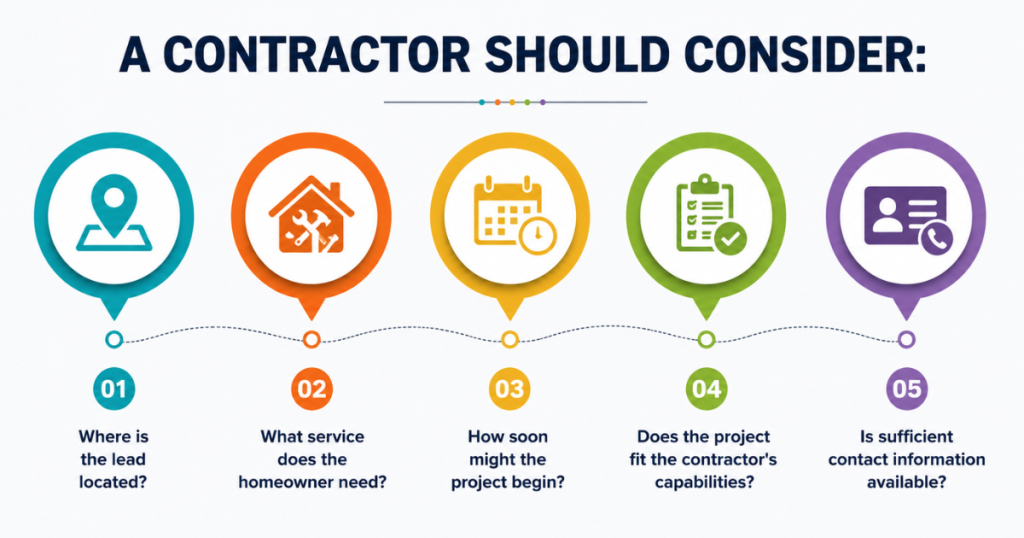
A contractor should consider:
- Where is the lead located?
- What service does the homeowner need?
- How soon might the project begin?
- Does the project fit the contractor’s capabilities?
- Is sufficient contact information available?
For RenoLeadz, the objective is to help renovation and home improvement businesses create opportunities that are relevant to the services they provide.
Contractors should always understand how a provider generates leads, how leads are qualified, what information is supplied, and whether leads are exclusive or shared.
How Marketing for Renovation Companies Supports Sales
Marketing and sales should not operate as separate activities.
Marketing creates awareness and attracts potential customers.
Sales turns qualified opportunities into projects.
For renovation companies, the journey may look like:
Google Search → Blog → Service Page → Enquiry → Response → Consultation → Estimate → Project
Each stage has a role.
SEO helps homeowners discover your business.
A useful blog answers their questions.
A service page explains what you offer.
A lead form captures the enquiry.
Fast follow-up creates momentum.
A consultation builds understanding.
An estimate provides a path forward.
The project is the result.
This is why marketing for renovation companies should be designed around the entire customer journey rather than focusing only on traffic or social media followers.
Common Mistakes Contractors Make With Renovation Leads
Waiting too long to respond
A delayed response gives the homeowner more time to contact another contractor.
Talking about price too early
Price is important, but homeowners first need to understand whether the contractor is right for their project.
Asking too many questions at once
Qualification should feel like a conversation, not a questionnaire.
Sending generic follow-ups
Follow-ups should be relevant to the homeowner’s project.
Not tracking lead sources
Without tracking, it is difficult to know which marketing channels are producing quality opportunities.
Treating every project the same
A basement renovation, kitchen renovation, and luxury home renovation can require very different sales processes.
Ignoring lost leads
Lost leads contain useful information that can improve marketing and sales.
Conclusion
Winning a renovation project is not only about finding a homeowner who needs work.
It is about what happens after that homeowner raises their hand.
A contractor can invest heavily in SEO, advertising, referrals, or Contractor Lead Generation Services, but the opportunity can still be lost if the response is slow, communication is unclear, or follow-up stops too early.
The strongest approach is straightforward:
- Respond quickly.
- Understand the project.
- Qualify the opportunity.
- Build trust.
- Make the consultation easy.
- Follow up professionally.
- Track the result.
Whether you are handling Home Renovation Leads, basement renovation leads, or opportunities for a luxury home renovation, the fundamentals remain the same: be responsive, useful, professional, and clear.
For renovation businesses looking to create a stronger and more organised pipeline, RenoLeadz can support a broader lead-generation strategy designed around renovation and home improvement opportunities.
The objective is not simply to generate more leads.
It is to help contractors make the most of the right leads before another contractor gets the opportunity first.
Frequently Asked Questions
How quickly should contractors respond to Home Renovation Leads?
Contractors should respond as promptly as reasonably possible, particularly when the homeowner has requested contact. A quick acknowledgement followed by a useful conversation can help maintain engagement.
What information should contractors collect from a renovation lead?
Start with the basics: location, project type, approximate scope, desired timing, and any information the homeowner already has about the project. Additional details can be collected during a consultation.
How can contractors close more Home Renovation Leads?
A strong process combines fast response, proper qualification, trust-building, clear communication, convenient consultation scheduling, consistent follow-up, and accurate lead tracking.
Are Contractor Lead Generation Services useful?
They can be useful when the leads are relevant to the contractor’s location, services, project type, and capacity. Contractors should evaluate lead quality and conversion results rather than focusing only on lead volume.
How should contractors handle basement renovation leads?
Contractors should first understand the homeowner’s goals and the existing condition of the basement. Important considerations may include moisture, insulation, electrical systems, plumbing, ceiling height, egress, intended use, and applicable local requirements.