
Managing a construction project requires much more than completing physical work on a job site. General contractors must coordinate people, materials, schedules, budgets, subcontractors, clients, suppliers, inspections, and unexpected changes.
When these areas are managed properly, Construction Projects are more likely to stay on schedule, within budget, and aligned with the client’s expectations.
However, even well-planned projects can face delays. Material shortages, weather, design changes, labour issues, communication gaps, unexpected site conditions, and budget problems can quickly affect a construction schedule.
For general contractors, the goal is not to prevent every possible problem. That is rarely realistic. The goal is to identify risks early, communicate clearly, and have a process for dealing with problems before they become larger issues.
At the same time, contractors need to think about the future of their businesses. Completing today’s project successfully is important, but maintaining a steady pipeline of future work is equally important.
This is where digital marketing and contractor lead generation services can help.
In this guide, we explain how general contractors can keep Construction Projects organised while also exploring how Builders and Contractors Can Find New Opportunities in an increasingly competitive market.
What Does It Mean to Keep a Construction Project on Track?
Keeping a construction project on track means managing the project so that the major objectives remain under control.
These objectives normally include:
- Schedule
- Budget
- Scope
- Quality
- Safety
- Communication
- Client expectations
A project does not necessarily need to follow the original plan perfectly. Construction conditions can change.
A strong contractor is prepared to adjust the plan when necessary without losing control of the overall project.
The best project managers monitor progress regularly instead of waiting until a major problem appears.
Why Construction Projects Fall Behind
Construction delays can happen for many reasons.
Some are predictable, while others are unexpected.
Common causes include poor initial planning, unclear project responsibilities, late material deliveries, labour shortages, design changes, communication problems, weather conditions, inspection delays, and unexpected site conditions.
A small problem can also create a chain reaction.
For example, if a key material arrives late, a subcontractor may not be able to complete their work. This can delay another trade, which can then affect the next stage of the project.
This is why proactive project management is so important.
1. Start With a Clear Project Plan
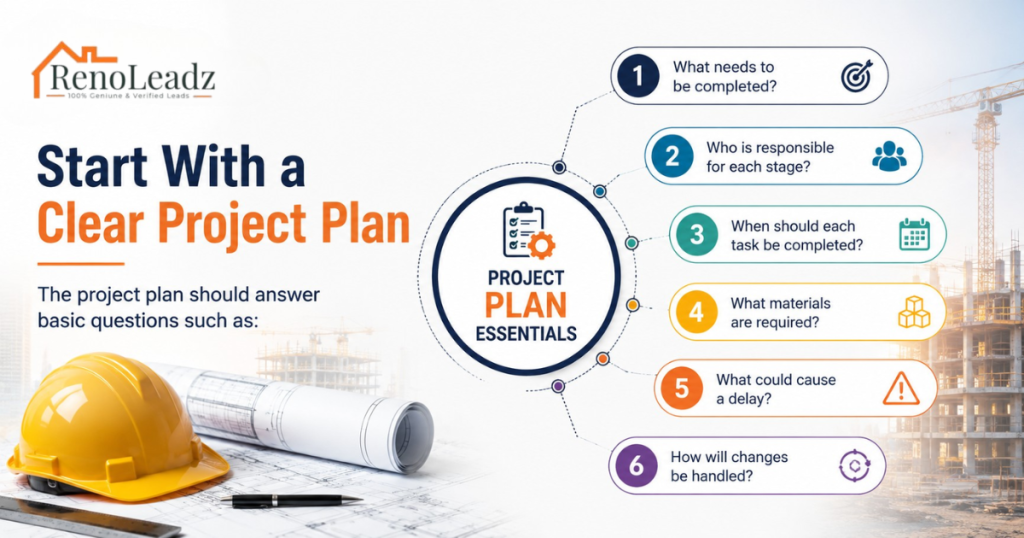
Successful Construction Projects usually begin with a clear plan.
Before work starts, the general contractor should understand the project’s scope, expected timeline, budget, materials, labour requirements, subcontractors, approvals, and client expectations.
A clear plan provides a reference point for the entire team.
The project plan should answer basic questions such as:
- What needs to be completed?
- Who is responsible for each stage?
- When should each task be completed?
- What materials are required?
- What could cause a delay?
- How will changes be handled?
A detailed plan does not guarantee that a project will have no problems, but it gives the contractor a stronger foundation for managing them.
2. Build a Realistic Construction Schedule
A construction schedule should be realistic rather than overly optimistic.
General contractors need to consider the relationship between different stages of work.
For example, electrical, plumbing, framing, drywall, flooring, cabinetry, painting, and finishing work may depend on other tasks being completed first.
If one stage is delayed, the following stages may also be affected.
A useful schedule should identify important milestones and dependencies.
It should also allow reasonable flexibility for issues that are outside the contractor’s control.
Regular schedule reviews can help identify delays early.
Instead of asking whether the project is already behind, contractors should ask:
Are we still on track for the next milestone?
That question encourages proactive management.
3. Set Clear Roles and Responsibilities
Construction projects involve many people.
The general contractor may work with architects, engineers, subcontractors, suppliers, project managers, inspectors, designers, and homeowners.
Confusion about responsibility can create unnecessary delays.
Every major task should have a clear owner.
Team members should understand what they are responsible for, what information they need, and who they should contact when a problem occurs.
Clear responsibilities can reduce duplicated work and prevent important tasks from being overlooked.
It also creates accountability.
When everyone understands their role, communication becomes easier and decisions can be made more quickly.
4. Communicate With Everyone Involved
Communication is one of the most important parts of project management.
A contractor can have an excellent schedule, but if information is not shared with the right people at the right time, problems can still develop.
Regular communication should take place between the contractor, client, subcontractors, suppliers, and other relevant professionals.
Project updates can cover:
- Completed work
- Upcoming tasks
- Delays
- Material deliveries
- Design changes
- Safety concerns
- Budget issues
- Decisions that require approval
Communication should also be documented where appropriate.
Written records can help everyone understand what was agreed upon and reduce misunderstandings later.
For homeowners, regular updates can also improve confidence in the contractor.
5. Monitor Costs and Materials
Budget management is another major part of keeping Construction Projects on track.
A project can be completed on schedule and still become a problem if costs significantly exceed the budget.
General contractors should monitor material costs, labour, subcontractor expenses, equipment, and approved changes.
Material planning is particularly important.
Late materials can affect both schedule and cost.
Before a project reaches a critical stage, contractors should confirm that the necessary materials have been ordered and that expected delivery dates are still realistic.
Early planning gives contractors more time to find alternatives if a supplier experiences a problem.
6. Manage Risks Before They Become Problems
Every construction project has risks.
Some risks are related to weather. Others may involve labour, materials, site conditions, design, regulations, or client decisions.
The goal of risk management is to identify potential problems early and create a response plan.
For example, if a contractor knows that a particular material has a long delivery time, ordering it early can reduce the risk of a schedule delay.
If weather may affect exterior work, the contractor can plan alternative tasks that can be completed during poor conditions.
Risk management is essentially about asking:
What could go wrong, and what can we do about it before it happens?
This mindset makes project management more proactive.
7. Track Quality at Every Stage
Quality control should not be left until the final inspection.
Small problems are generally easier and less expensive to correct when they are identified early.
General contractors should monitor workmanship throughout the project and make sure work is completed according to the agreed plans, specifications, applicable requirements, and quality expectations.
Regular inspections can help identify issues before the next trade begins.
This is particularly important because one mistake can affect several later stages of a project.
Quality management protects the contractor’s reputation while helping the project move forward smoothly.
8. Manage Changes Carefully
Changes are common in construction.
A client may change a material, modify a design, add a room, adjust a layout, or request additional work.
The problem is not necessarily the change itself.
The problem occurs when changes are made without clearly understanding their impact on cost and schedule.
Before approving significant changes, contractors should make sure the client understands how the change may affect the project.
The revised scope, price, and schedule should be documented appropriately.
A clear change management process helps prevent misunderstandings and protects both the contractor and the client.
9. Use Technology to Improve Project Management
Modern construction businesses have access to many digital tools that can make project management easier.
Project management software can help teams organise schedules, tasks, documents, communications, budgets, and updates.
Digital communication can also make it easier to share project information between the office and the job site.
Technology should not replace good management.
Instead, it should support the processes already used by the contractor.
The right tools can help teams save time, reduce paperwork, improve visibility, and make decisions using current project information.
10. Maintain a Consistent Pipeline of New Opportunities
Keeping current Construction Projects on track is essential, but contractors also need to think about their next project.
A construction company can complete an excellent project today and still face a difficult period later if there are not enough future opportunities in the sales pipeline.
This is why business development should continue even when the company is busy.
Contractors can use SEO, local search, social media, referrals, paid advertising, content marketing, networking, and contractor lead generation services to create new opportunities.
A consistent marketing process allows contractors to build their pipeline before they actually need more work.
This is particularly important for businesses that experience seasonal demand.
How Contractor Lead Generation Services Support Business Growth
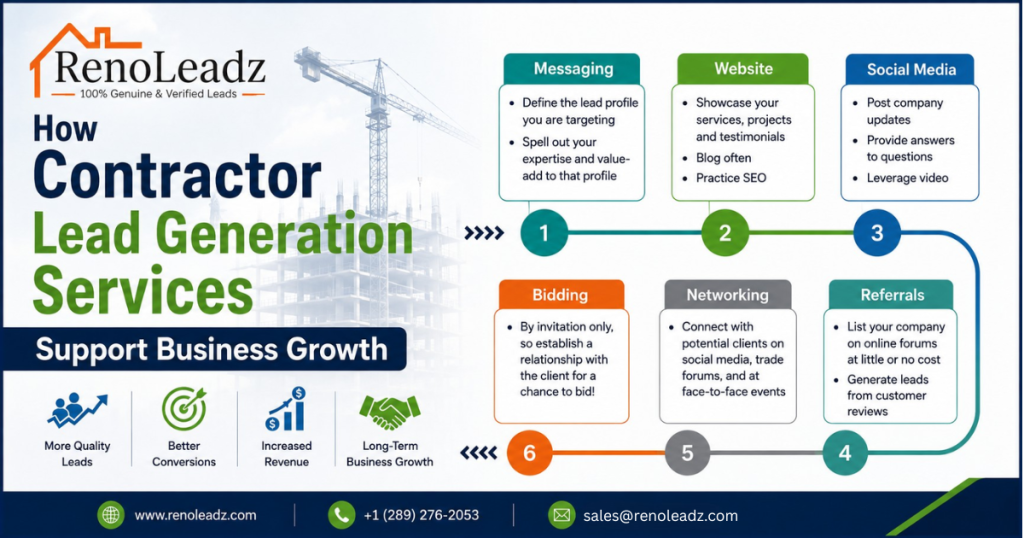
Digital marketing can be difficult to manage while running multiple Construction Projects.
Contractors may not have enough time to research keywords, create content, manage advertising campaigns, monitor SEO performance, respond to enquiries, and track marketing results.
This is where contractor lead generation services in Toronto can become part of a broader business development strategy.
A lead generation service can help contractors reach homeowners or businesses that are actively looking for relevant construction or renovation services.
However, contractors should focus on lead quality rather than simply lead volume.
A useful lead should match important factors such as:
Location: Is the potential customer within your service area?
Service: Does the project match what your company provides?
Project type: Is the project appropriate for your team?
Timing: Is the customer planning to begin within a realistic timeframe?
Budget: Does the opportunity fit your business model?
A clear lead qualification process can help contractors spend more time on opportunities that are relevant to their business.
How Builders and Contractors Can Find New Opportunities
Builders and Contractors Can Find New Opportunities by combining several marketing channels rather than relying on a single source.
A strong strategy may include local SEO, Google Ads, social media, website content, referral marketing, email marketing, and professional lead generation.
SEO is particularly useful for long-term visibility.
For example, a contractor can create useful content around questions that potential customers search for before starting a project.
A commercial builder might publish information about planning a commercial construction project.
A renovation contractor could publish a guide about renovation costs and timelines.
A home builder could create content explaining the stages of building a new home.
This content helps potential customers discover the business during the research stage.
Google Ads can also help reach users with stronger buying intent.
{Prefer Reading: Guide to Create Google Ads Campaigns to get Home Renovation Leads}
Social media can demonstrate completed projects, customer experiences, company expertise, and the people behind the business.
Together, these channels can create a more complete customer journey.
How RenoLeadz Helps Contractors Build More Opportunities
For contractors, marketing should ultimately support business growth.
RenoLeadz focuses on helping renovation and home improvement businesses connect with potential customers through lead generation.
The company’s approach can complement a contractor’s existing marketing strategy by helping create additional opportunities while the contractor focuses on managing projects and serving customers.
The right lead generation approach depends on the contractor’s service area, project size, capacity, target customer, and growth goals.
Before selecting a lead generation provider, contractors should understand how leads are generated, what information is included, which areas are covered, and whether opportunities are exclusive or shared.
A transparent process allows contractors to make better decisions about their marketing investment.
Common Construction Project Management Mistakes
Even experienced contractors can face avoidable problems.
One common mistake is creating unrealistic schedules. A schedule that does not account for dependencies, material availability, or potential delays can quickly become difficult to maintain.
Another mistake is poor communication. When project information is not shared clearly, small misunderstandings can become expensive problems.
Ignoring material lead times can also create unnecessary delays.
Contractors should also avoid making significant changes without documenting their impact on the project.
Finally, businesses should avoid stopping marketing whenever they become busy.
When the current project finishes, there may be no new opportunities waiting unless business development has continued.
Conclusion
Keeping Construction Projects on track requires planning, communication, cost control, quality management, and the ability to respond to problems before they become major issues.
The most successful general contractors do not simply react to problems. They create systems that help them identify risks, communicate with their teams, monitor progress, and make informed decisions.
At the same time, contractors need to maintain a healthy pipeline of future opportunities.
SEO, content marketing, local search, paid advertising, social media, and contractor lead generation services in Mississauga can all contribute to a stronger business development strategy.
The key is to build a system that supports both sides of the business: completing current projects successfully and creating opportunities for future projects.
For renovation and home improvement businesses looking to strengthen their lead pipeline, RenoLeadz can be part of that growth strategy.
Want to create more opportunities for your contracting business? Explore RenoLeadz and build a stronger pipeline while you focus on delivering quality Construction Projects.
Frequently Asked Questions
How do general contractors keep Construction Projects on track?
General contractors keep Construction Projects on track through detailed planning, realistic scheduling, clear responsibilities, regular communication, cost control, risk management, quality checks, and careful change management.
What is the biggest cause of construction delays?
There is no single cause of every construction delay. Common causes include poor planning, material delays, labour shortages, design changes, communication problems, weather, unexpected site conditions, and approval delays.
Why is communication important in construction?
Clear communication helps contractors, subcontractors, suppliers, and clients understand responsibilities, schedules, changes, and project expectations. Good communication can reduce misunderstandings and help identify problems earlier.
How can contractors find more construction opportunities?
Contractors can use local SEO, website content, Google Ads, social media, referrals, networking, and contractor lead generation services to attract new opportunities.
What are contractor lead generation services?
Contractor lead generation services help construction and renovation businesses attract potential customers who are looking for relevant services. Contractors should evaluate providers based on lead quality, location, project fit, and conversion results.