
For a contractor, having enough work is important. Having the right work at the right time is even more important.
A renovation company may be excellent at kitchens, bathrooms, basements, additions, or custom builds, but that expertise does not automatically guarantee a steady flow of new enquiries. Homeowners have more ways than ever to research contractors, compare companies, read reviews, and request quotes.
That is why many contractors look at lead services for contractors as part of their growth strategy.
However, choosing a lead provider should not be based on the promise of receiving a large number of leads.
A contractor needs to know where the leads come from, whether they match the company’s services, whether they are located in the right market, what information is supplied, and how the provider measures lead quality.
A homeowner looking for basement renovation leads, for example, may be a valuable opportunity for a contractor specialising in basement projects. The same lead may be irrelevant to a company that only handles exterior renovations.
The same principle applies to Home Renovation Leads, luxury projects, additions, kitchens, bathrooms, and custom renovation projects.
The best lead strategy is not necessarily the one that delivers the most enquiries.
It is the one that creates relevant opportunities a contractor can realistically turn into consultations, estimates, and projects.
This guide explains what contractors should look for when comparing Contractor Lead Generation Services and how to build a more reliable approach to lead generation.
What Are Lead Services for Contractors?
Lead services for contractors are marketing services designed to help construction, renovation, and home improvement businesses connect with potential customers.
A lead may be a homeowner who has requested information, submitted a project enquiry, called a business, or otherwise indicated an interest in a renovation service.
These opportunities can come from several channels, including search engines, websites, paid advertising, social media, local marketing, referral networks, and dedicated lead-generation campaigns.
The quality of the lead depends on several factors.
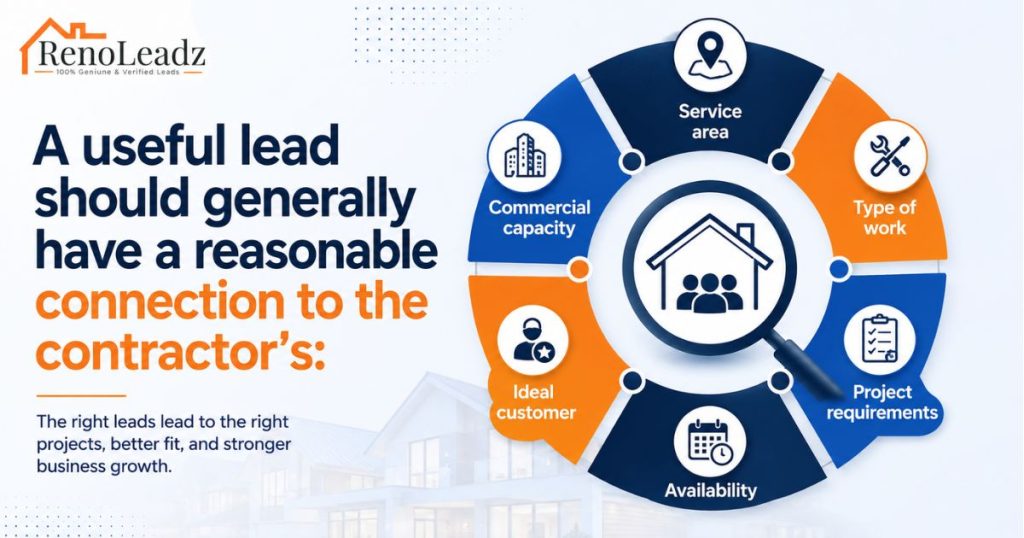
A useful lead should generally have a reasonable connection to the contractor’s:
- Service area
- Type of work
- Project requirements
- Availability
- Ideal customer
- Commercial capacity
This is why contractors should evaluate a provider based on lead relevance, not just lead volume.
Why Lead Quality Matters More Than Lead Volume
Imagine two contractors receive 50 enquiries.
The first contractor receives enquiries from homeowners who are outside the company’s service area or are looking for work the company does not provide.
The second contractor receives fewer enquiries, but most are from homeowners who need the company’s services and are located in its target market.
The second contractor may have a much stronger opportunity despite receiving fewer leads.
This is one of the most important concepts when evaluating Contractor Lead Generation Services in Mississauga.
Lead quality affects how much time a sales team spends reviewing enquiries, making calls, preparing estimates, and following up.
A high number of poor-fit leads can create additional work without producing meaningful revenue.
For that reason, contractors should ask providers detailed questions before signing up.
1. Understand Where the Leads Come From
The first question to ask any provider is simple:
Where do your leads come from?
A reputable provider should be able to explain the general acquisition process.
For example, leads may be generated through search marketing, online advertising, content, landing pages, social media, or other digital channels.
Understanding the source helps a contractor determine whether the lead-generation model matches the company’s marketing goals.
Search-based campaigns can be particularly valuable because homeowners may already be looking for a specific service.
Someone searching for a renovation contractor has a different level of intent from someone casually browsing renovation photographs.
That distinction matters.
When evaluating Home Renovation Leads, ask whether the provider can explain how homeowners enter the lead system and what action they take before becoming a lead.
Transparency at this stage can prevent confusion later.
2. Check Lead Relevance and Qualification
Not every homeowner enquiry is automatically a qualified lead.
A contractor should understand how the provider determines whether an opportunity is relevant.
For example, a lead qualification process may consider:
- Location
- Requested service
- Project description
- Approximate timeline
- Contact details
- Other available project information
The exact qualification process will vary by provider.
The important thing is that contractors understand what they are paying for.
If your company specialises in basement renovations, receiving enquiries for unrelated services may not provide much value.
A contractor focused on luxury home renovation in Canada may also have different requirements from a company focused on smaller residential projects.
The ideal lead profile should therefore be defined before a campaign begins.
3. Confirm Your Service Area
Location is one of the most important factors in contractor lead generation.
A lead may look excellent on paper, but if the homeowner is too far away, the opportunity may not be practical.
Before purchasing or accepting leads, confirm exactly which cities, communities, or regions the provider covers.
This is especially important for contractors operating in competitive Canadian markets.
A renovation company may serve a specific group of communities rather than an entire province.
A good lead strategy should reflect the contractor’s actual service area.
For example, a company might focus its marketing on several communities within the Greater Toronto Area rather than trying to target every possible market.
Local relevance can improve the usefulness of Home Renovation Leads and reduce wasted sales time.
4. Ask Whether Leads Are Exclusive or Shared
One of the most important questions contractors should ask is whether leads are exclusive or shared.
An exclusive lead is generally provided to one contractor, subject to the provider’s specific terms.
A shared lead may be supplied to multiple contractors.
Neither model is automatically right or wrong.
The key is understanding what you are buying.
If a homeowner receives calls from several companies shortly after submitting an enquiry, the contractor may have to compete more aggressively for the opportunity.
With shared lead services for contractors, price and volume may sometimes be structured differently from exclusive models.
Ask the provider:
Are leads exclusive?
If they are shared, how many contractors may receive the same lead?
When is the lead distributed?
How quickly is the lead delivered?
Clear answers allow you to compare providers fairly.
5. Understand the Information Provided
Before accepting a lead, contractors need enough information to determine whether it is worth pursuing.
The amount of information available will vary.
Depending on the provider and campaign, it may include the homeowner’s contact information, location, requested service, project description, preferred timing, and other relevant details.
The more useful information a contractor receives, the easier it can be to prioritise follow-up.
For example, knowing that someone wants a basement renovation is useful. Knowing the type of basement project, general location, project timeline, and preferred contact method can provide additional context.
This is particularly important for specialised services.
A company looking for custom renovation projects in Toronto may want more detailed project information before deciding how to allocate sales resources.
6. Evaluate Lead Costs and Potential Value
Cost per lead is an important metric, but it should not be the only metric.
A cheaper lead is not necessarily a better lead.
Suppose one provider offers low-cost leads that rarely turn into consultations, while another provider offers more expensive leads that frequently result in estimates.
The second provider could produce better business results despite having a higher initial lead cost.
Contractors should look at the complete sales journey.
A useful measurement framework includes:
Lead → Qualified Lead → Consultation → Estimate → Won Project
This allows the contractor to understand where marketing investment is actually producing results.
The ultimate question should be:
How much revenue and profit does the marketing system generate compared with what the contractor spends?
This broader view is much more useful than judging a campaign only by the number of enquiries received.
7. Check the Provider's Industry Experience
Home renovation is different from many other industries.
A contractor may need leads for a project that involves significant planning, multiple trades, permits, design decisions, financing considerations, and a longer sales cycle.
That means a provider familiar with lead generation for home services may have a better understanding of the customer journey than a provider using a generic lead-generation model.
Ask whether the provider understands renovation-related services.
Relevant experience may include:
- General contracting
- Kitchen renovations
- Basement renovations
- Bathroom renovations
- Home additions
- Custom renovations
- Luxury renovation
- Other residential construction services
Industry knowledge can make it easier to develop useful campaigns and communicate with the right audience.
8. Look for Transparent Reporting
A contractor should be able to understand how a marketing campaign is performing.
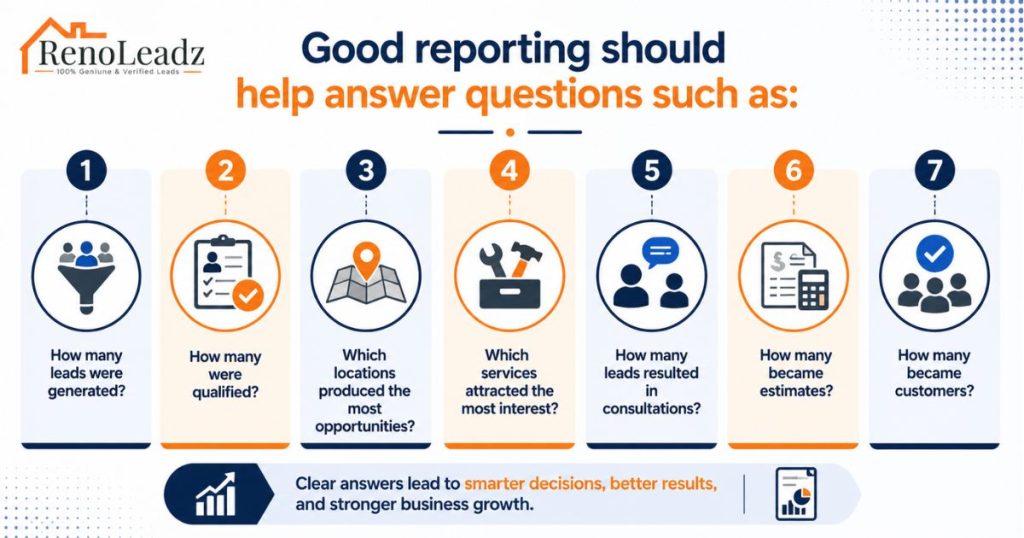
Good reporting should help answer questions such as:
- How many leads were generated?
- How many were qualified?
- Which locations produced the most opportunities?
- Which services attracted the most interest?
- How many leads resulted in consultations?
- How many became estimates?
- How many became customers?
These measurements are much more valuable than simply reporting impressions or clicks.
For marketing for renovation companies, the final business outcome matters.
A campaign that produces website traffic but no meaningful enquiries may need improvement.
A campaign generating fewer visitors but stronger project enquiries may be more valuable.
Reporting helps contractors make informed decisions rather than relying on assumptions.
9. Consider Different Types of Renovation Leads
A contractor’s marketing strategy should reflect the services the company actually wants to sell.
Different projects can require different campaigns.
For example, a contractor may target:
Kitchen renovation leads for homeowners planning new cabinets, layouts, appliances, and finishes.
Basement renovation leads for homeowners looking to create additional living space, entertainment areas, offices, or other basement improvements.
Luxury home renovation enquiries for higher-end projects involving premium finishes, detailed design, and specialised workmanship.
Custom renovation projects for homeowners who need a more personalised approach to an unusual property or renovation requirement.
The landing page, advertisement, content, and lead qualification process should all align with the project type.
This creates a more consistent customer journey.
10. Review the Follow-Up Process
Lead generation does not end when an enquiry arrives.
Follow-up can have a major influence on the outcome.
A homeowner who submits an enquiry may also be contacting other contractors.
A slow response can mean losing an otherwise valuable opportunity.
Contractors should have a clear process for responding to new leads.
That could include reviewing the enquiry, contacting the homeowner, confirming project details, determining whether the project is a fit, and arranging the next step.
The speed and quality of follow-up should also be tracked.
Even excellent Contractor Lead Generation Services cannot compensate for a weak sales process.
Marketing creates opportunities.
The contractor’s team must turn those opportunities into conversations and projects.
How Lead Services for Contractors Fit Into a Marketing Strategy
Lead generation should not exist separately from the rest of your marketing.
The strongest strategy often combines several channels.
For example:
SEO builds long-term organic visibility.
Content marketing answers homeowner questions.
Local SEO helps contractors become visible in specific service areas.
Social media demonstrates projects and builds familiarity.
Paid advertising can capture high-intent searches.
Lead generation services can create additional opportunities.
Follow-up systems help convert enquiries.
Together, these channels create a complete customer journey.
This is especially useful for marketing for renovation companies, where homeowners may research a business for weeks before making a decision.
How SEO and Lead Generation Work Together
SEO and paid or direct lead generation should not be viewed as competing strategies.
They can support each other.
SEO is generally a long-term investment. It can help a contractor build organic visibility for searches related to renovation services.
Content can answer questions before a homeowner contacts the business.
For example, a contractor might publish:
How Much Does a Basement Renovation Cost?
That article can target informational intent.
A separate service page can target:
Basement Renovation Contractor
That page can target commercial intent.
Both pages can work together.
The informational article answers questions, while the service page helps users who are closer to hiring.
This is the foundation of a useful hub-and-spoke SEO structure.
How RenoLeadz Can Help
RenoLeadz focuses on SEO, social media marketing, and renovation-related lead generation.
For contractors, the objective should be more than simply increasing traffic.
The marketing strategy should connect the right audience with the right service.
A contractor specialising in kitchens needs a different strategy from a company focused on basements, luxury renovations, additions, or broader home improvement projects.
RenoLeadz can help contractors build marketing campaigns around the services and markets they want to grow.
The right approach should consider the contractor’s service area, ideal project, target audience, budget, capacity, and business goals.
Contractors considering Contractor Lead Generation Services should also ask practical questions before committing to a provider.
Understand how leads are generated, how they are qualified, what information is supplied, how they are delivered, and how campaign performance is measured.
A transparent process gives contractors a stronger basis for making decisions.
Common Mistakes When Choosing a Lead Provider
One of the biggest mistakes is choosing a provider based only on the number of leads promised.
More leads do not automatically mean more projects.
Another mistake is failing to define the ideal customer.
If the provider does not understand your service area or project type, the campaign may attract poor-fit enquiries.
Contractors should also avoid ignoring the sales process.
A good lead can still be lost if nobody responds quickly or follows up properly.
Another common mistake is not tracking results beyond the initial enquiry.
A contractor should know which leads become consultations, estimates, and completed projects.
Finally, avoid assuming that every marketing channel will work equally well for every company.
Marketing should be tested, measured, and improved based on actual business results.
Conclusion
Choosing the right provider for lead services for contractors requires more than comparing prices or counting the number of enquiries promised.
Contractors should look at the entire process.
Where do the leads come from?
Are they relevant to the company’s services?
Are they located in the right market?
Are they exclusive or shared?
What information is provided?
How are results measured?
Most importantly, do the opportunities turn into real conversations, estimates, and projects?
For renovation companies, Home Renovation Leads, basement renovation leads, luxury renovation enquiries, and custom renovation projects can all require different marketing approaches.
That is why a good lead-generation strategy should be built around the contractor’s actual business rather than a generic campaign.
SEO, content marketing, social media, local search, paid advertising, and Contractor Lead Generation Services can work together to create a stronger acquisition system.
For contractors looking to improve their digital presence and generate more relevant renovation opportunities, RenoLeadz provides SEO, SMM, and lead-generation support focused on the renovation industry.
The goal should not simply be more leads.
The goal should be better opportunities, better conversations, and a healthier project pipeline.
Frequently Asked Questions
What are lead services for contractors?
Lead services for contractors are marketing services that help construction, renovation, and home improvement businesses connect with potential customers interested in their services.
What makes a good contractor lead?
A good contractor lead should generally match the company’s service area, project type, customer profile, and ability to take on the work. Accurate contact and project information can also make an enquiry more useful.
Are Home Renovation Leads worth buying?
They can be valuable when the leads are relevant, properly sourced, and aligned with the contractor’s services and market. Contractors should evaluate lead quality and eventual project conversion rather than focusing only on price.
What are basement renovation leads?
Basement renovation leads are enquiries from homeowners who are interested in renovating, finishing, converting, or improving a basement. The exact project can vary considerably, so contractors should qualify the homeowner’s requirements.
What should I ask a lead generation company before signing up?
Ask where leads come from, how they are qualified, whether they are exclusive or shared, what information is provided, which locations are covered, how leads are delivered, how invalid leads are handled, and how campaign performance is reported