
Getting a new enquiry from a homeowner can feel like a win.
But an enquiry is not the same thing as a customer.
A homeowner may fill out a form, call a contractor, request a quote, or send a message on social media and then disappear. From the contractor’s point of view, it can be frustrating. Marketing costs money, sales follow-up takes time, and every missed opportunity can feel like wasted effort.
The problem, however, is not always the number of Home Renovation Leads a contractor receives.
Sometimes the real problem is what happens after the lead arrives.
A lead may have the wrong project, live outside the service area, have unrealistic expectations, or simply be at an early research stage. In other cases, the contractor may take too long to respond, provide a confusing quote, or fail to communicate why their company is the right choice.
Understanding these problems is the first step towards improving lead conversion.
For renovation contractors, the goal should not be to chase every enquiry. The goal is to attract relevant homeowners, identify good opportunities, respond professionally, and make the buying process easier.
This guide explains why renovation enquiries often fail to become paying customers and what contractors can do differently.
What Is a Renovation Lead?
A renovation lead is a potential customer who has expressed some level of interest in a renovation service.
The enquiry could relate to a kitchen renovation, bathroom upgrade, basement finishing, home addition, exterior improvement, or a larger custom renovation project.
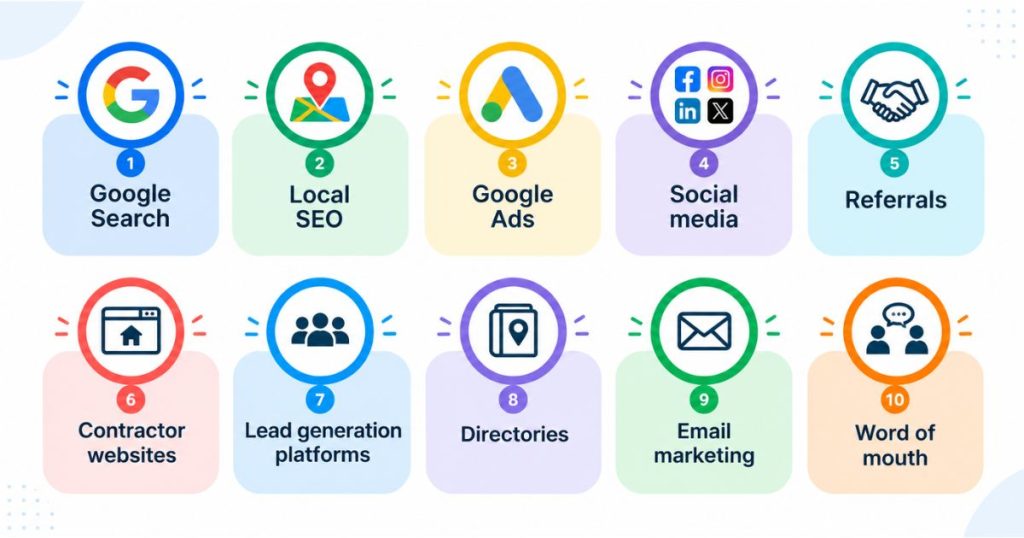
A lead can come from many sources, including:
- Google search
- Local SEO
- Google Ads
- Social media
- Referrals
- Contractor websites
- Lead generation platforms
- Directories
- Email marketing
- Word of mouth
However, not every lead has the same value.
Someone searching for renovation ideas is very different from a homeowner who has already decided on a project and wants an estimate.
That difference is important.
A contractor’s marketing strategy should therefore consider intent, not just volume.
Why Good Leads Do Not Always Become Customers
There is no single reason why a renovation lead fails to convert.
Usually, several factors are involved.
The homeowner may not be ready. The project may not fit the contractor. The contractor may respond too slowly. The website may not create enough confidence. The estimate may be unclear. Or the homeowner may simply choose another company.
A lead conversion problem is often a process problem rather than a marketing problem alone.
Think about the customer journey:
Search → Enquiry → Response → Qualification → Consultation → Estimate → Decision → Project
A weakness at any stage can reduce the chance of winning the project.
That means contractors should look at the entire journey instead of focusing only on generating more leads.
1. The Lead Does Not Match Your Ideal Customer
One of the biggest reasons Home Renovation Leads fail to become customers is poor fit.
A contractor might receive an enquiry for a project they do not normally handle.
For example, a contractor specialising in kitchens may receive enquiries about roofing. A company focused on high-end renovations may receive requests from homeowners looking for the lowest possible price.
Neither enquiry is necessarily a bad lead.
It is simply the wrong lead for that business.
This is why contractors should clearly define their ideal customer.
Consider factors such as:
- Service area
- Project type
- Property type
- Approximate project scope
- Desired timeline
- Budget expectations
- Required services
When marketing is built around these factors, lead quality can improve because the message is more closely aligned with the contractor’s actual business.
2. Slow Follow-Up Can Cost Valuable Opportunities
Homeowners often contact several contractors when planning a renovation.
If one company responds quickly and professionally while another takes several days to reply, the first company may get the opportunity to start the conversation sooner.
Fast follow-up does not mean pressuring the homeowner.
It means acknowledging the enquiry and setting expectations.
A simple response can confirm that the enquiry was received and explain the next step.
For example, a contractor might arrange a call, request project details, or schedule an initial consultation.
The important thing is to keep the conversation moving.
A lead should not enter a black hole after completing a form.
Contractors should have a clear process for responding to new enquiries, including evenings or weekends when appropriate for their business.
3. Poor Lead Qualification Creates Wasted Time
Not every homeowner who contacts a contractor is ready for an estimate.
Some are still gathering ideas.
Others are comparing prices without having a clear project scope.
Some may not understand what their renovation actually involves.
Good qualification helps contractors understand whether an opportunity is worth pursuing.
For example, a contractor may want to know:
- What type of renovation are you planning?
- Where is the property located?
- What part of the home will be renovated?
- When are you hoping to begin?
- Have you established a project budget?
- Have you already hired a designer or architect?
These questions do not need to feel like an interrogation.
They can be part of a helpful conversation.
The objective is to understand the project and determine whether the contractor is a suitable fit.
4. The Homeowner Is Still Researching
Not every lead is ready to buy.
Renovation projects can involve significant spending, planning, and decision-making.
A homeowner may contact a contractor months before they are ready to begin.
This does not automatically make the enquiry worthless.
It means the customer is at a different stage of the buying journey.
A contractor can use educational content to stay useful during this period.
For example, homeowners may need information about:
- Renovation planning
- Project timelines
- Material choices
- Permits
- Budget planning
- Design decisions
- Contractor selection
This is where content marketing can support marketing for renovation companies.
Instead of treating every lead as an immediate sale, contractors can build trust throughout the research process.
5. Weak Trust Signals Make Homeowners Hesitate
Renovation is a trust-based purchase.
Homeowners are allowing a contractor into their property and trusting them with a significant investment.
Before choosing a company, they may look at its website, reviews, previous projects, social media profiles, and online reputation.
A contractor with little visible information can create uncertainty.
Strong trust signals can include genuine customer reviews, clear service information, project photography, professional contact details, and transparent communication.
Contractors should also avoid exaggerating claims.
Real project examples and accurate information are more persuasive than generic statements about being “the best contractor.”
For luxury home renovation, trust becomes especially important because project expectations and budgets can be higher.
A premium customer usually wants to understand the contractor’s experience, process, workmanship, communication, and attention to detail.
6. Poor Website and Landing Page Experience
A contractor may invest in advertising and SEO but still lose potential customers if the website creates friction.
Imagine a homeowner searches for a basement renovation contractor, clicks on an advertisement, and lands on a page that talks mainly about general construction services.
The homeowner now has to figure out whether the company actually provides the service they need.
That extra effort can create doubt.
A better landing page should immediately communicate:
- What service is offered?
- Where is it offered?
- Who is it for?
- What should the homeowner do next?
The page should also make contacting the contractor simple.
A clear phone number, enquiry form, service information, project examples, and call to action can make the next step easier.
This principle applies to basement renovation leads, kitchen renovation enquiries, bathroom projects, additions, and other specialised services.
7. Contractors Compete Mainly on Price
Price matters, but competing only on price can create problems.
If a homeowner receives five quotes and every contractor talks only about cost, the decision can become a price comparison.
Contractors should explain the value behind their proposal.
That could include project planning, communication, workmanship, materials, warranty information, scheduling, project management, or specialised expertise.
The goal is not to avoid discussing price.
It is to give the price context.
A homeowner should understand what they are paying for and what is included.
Clear proposals can also reduce misunderstandings later.
8. The Project Is Outside Your Service Area
A lead may look excellent on paper but still be unsuitable if the property is too far away.
Travel time, labour logistics, scheduling, and project management can make certain areas impractical.
This is why Local SEO for contractors is so important.
A contractor should clearly communicate the communities and areas they serve.
Local search pages should provide genuine information rather than simply repeating city names.
For example, a useful local page can explain the services offered, project types, service process, and relevant homeowner considerations for that market.
Strong local visibility helps attract people who are more likely to be able to hire the business.
9. The Lead Generation Strategy Is Too Broad
A broad marketing campaign can generate a large number of enquiries without generating many good opportunities.
For example, advertising “home improvement services” to a very wide audience may attract homeowners with many different needs.
A more focused campaign might target a specific service.
For example:
- Basement Renovation Leads
- Kitchen Renovation Leads
- Bathroom Renovation Leads
- Home Addition Leads
- Luxury Home Renovation Leads
The narrower approach makes it easier to align the advertisement, landing page, qualification questions, and contractor service.
This is one reason lead generation for home services works best when the campaign is built around a clear customer and project type.
10. There Is No Consistent Sales Process
Some contractors have strong marketing but an informal sales process.
Every enquiry is handled differently.
One homeowner gets a phone call. Another receives an email. Someone else may not hear back until the following week.
This creates inconsistency.
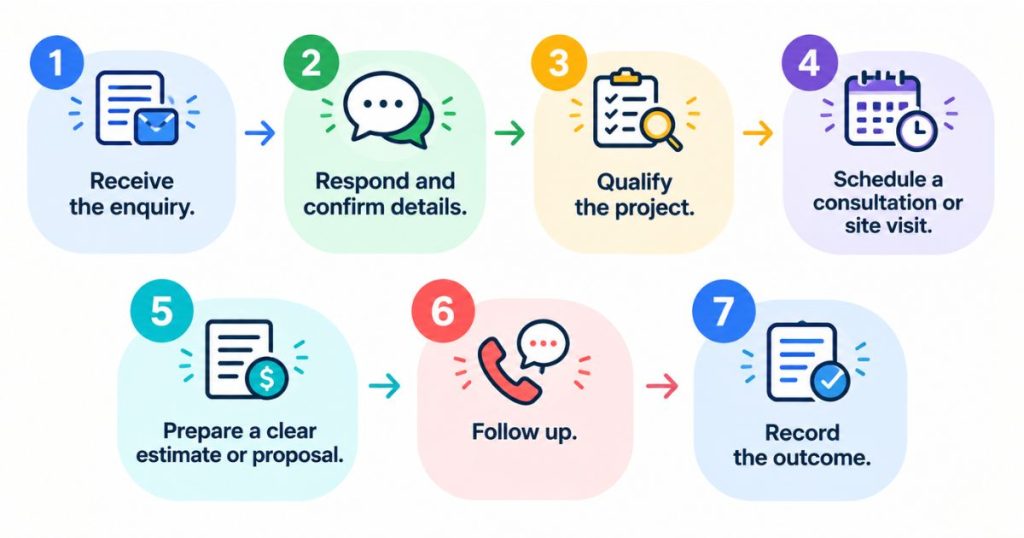
A simple sales process can make the customer journey easier to manage.
For example:
Step 1: Receive the enquiry.
Step 2: Respond and confirm details.
Step 3: Qualify the project.
Step 4: Schedule a consultation or site visit.
Step 5: Prepare a clear estimate or proposal.
Step 6: Follow up.
Step 7: Record the outcome.
The process does not need to be complicated.
It simply needs to be consistent.
How to Improve Home Renovation Lead Conversion
Generating more Home Renovation Leads is useful only when the business has a process for handling them.
Start by reviewing your existing leads.
Look at the last 20 or 50 enquiries and ask:
- How many were actually relevant?
- How many were contacted?
- How quickly were they contacted?
- How many booked a consultation?
- How many received estimates?
- How many became customers?
This analysis can reveal where the problem exists.
If most enquiries are irrelevant, the marketing strategy may need better targeting.
If leads are relevant but few respond, follow-up may need improvement.
If consultations happen but estimates rarely become projects, the sales process or proposal may need attention.
Data makes the problem easier to identify.
How Local SEO for Contractors Can Improve Lead Quality
Local SEO is about more than ranking for a city name.
It is about helping search engines and homeowners understand what a contractor does, where the company operates, and why the business is relevant.
A strong Local SEO strategy for contractors can include a well-maintained Google Business Profile, service pages, useful local content, genuine customer reviews, accurate business information, and relevant internal links.
Contractors should also create content around questions homeowners actually ask.
For example:
How much does a basement renovation cost?
What should I ask a renovation contractor?
How long does a kitchen renovation take?
Do I need a permit for my renovation?
The answers can attract homeowners earlier in the buying journey.
Over time, that visibility can support stronger organic lead generation.
How Contractor Lead Generation Services Can Help
SEO and content marketing are important long-term channels, but contractors may also want a more direct source of potential opportunities.
This is where Contractor Lead Generation Services can complement a broader digital strategy.
A lead generation provider can help contractors connect with homeowners who are actively looking for renovation or home improvement services.
However, contractors should evaluate providers carefully.
Before choosing a provider, ask:
- How are leads generated?
- What information is provided?
- Are leads screened or qualified?
- Which service areas are available?
- Are leads exclusive or shared?
- What happens when a lead is invalid?
- How is lead performance tracked?
The answers can help contractors understand whether a provider fits their business.
RenoLeadz focuses on lead generation for renovation and home improvement businesses, with an emphasis on connecting contractors with relevant project opportunities.
The goal should not simply be to increase lead volume.
The goal should be to create opportunities that have a reasonable fit with the contractor’s services, market, and capacity.
Basement Renovation Leads Require the Right Targeting
Basement projects can vary significantly.
One homeowner may want a simple finished basement. Another may want a home office, entertainment space, guest area, or secondary suite.
That means basement renovation leads should be evaluated according to project scope.
A contractor specialising in basement renovations can use targeted content to educate homeowners about planning, layouts, moisture considerations, permits, insulation, lighting, flooring, and other project decisions.
This type of content can attract homeowners who are serious about the project rather than simply browsing renovation photographs.
You can apply the same principle to kitchens, bathrooms, additions, and other renovation services.
Marketing for Renovation Companies Should Start Before the Sale
The best marketing for renovation companies does not begin with “Contact us today.”
It begins by answering the homeowner’s questions.
A homeowner who is considering a major renovation may have dozens of questions before making contact.
A contractor’s website should help answer them.
Useful content can explain the renovation process, planning considerations, common mistakes, material options, budgeting, timelines, and contractor selection.
This content can also demonstrate expertise.
For example, a contractor could publish an article explaining why proper basement moisture management matters or how to plan electrical requirements before a major renovation.
Helpful information creates an opportunity to demonstrate knowledge before the first sales conversation.
Luxury Home Renovation Requires a Different Approach
A luxury home renovation is rarely a simple product purchase.
The homeowner may care deeply about design, craftsmanship, materials, project management, privacy, communication, and attention to detail.
Marketing should reflect those expectations.
Instead of relying on generic advertising, premium contractors can use detailed project stories, professional photography, design-focused content, testimonials, and educational material.
The same principle applies to custom renovation projects.
When the project is highly personalised, homeowners want confidence that the contractor can understand their vision and manage the complexity.
The marketing message should therefore focus on expertise and process rather than simply saying Get a free quote.
A Simple Lead Conversion Framework for Contractors
Contractors can think about every enquiry using five basic questions:
1. Is it relevant?
Does the project match your services?
2. Is it local?
Is the property inside your practical service area?
3. Is the homeowner serious?
Is there a genuine project rather than casual browsing?
4. Can you help?
Does your company have the experience, capacity, and skills required?
5. What happens next?
Is there a clear next step for the homeowner?
If you can answer these five questions clearly, the lead is easier to manage.
Lead Conversion Checklist
Before increasing your marketing budget, review your existing process.
- Define your ideal customer.
- Clearly list the services you provide.
- Target the locations you actually serve.
- Respond promptly to new enquiries.
- Ask useful qualification questions.
- Show genuine project examples.
- Build trust with authentic reviews.
- Make your website easy to navigate.
- Use clear calls to action.
- Track consultations, estimates, and won projects.
More leads are not always the answer.
Sometimes the better opportunity is to improve what happens to the leads you already receive.
Conclusion
A large number of enquiries does not automatically mean a contractor has a successful marketing strategy.
The real measure is what happens after the enquiry arrives.
Some Home Renovation Leads will never become customers because they are outside the service area, have the wrong project, are not ready to start, or do not match the contractor’s ideal customer.
Others may be lost because of slow follow-up, weak communication, unclear estimates, or a lack of trust.
The solution is not always to spend more money on advertising.
Start by improving the complete customer journey.
Use Local SEO for contractors to reach relevant homeowners. Build useful content that answers questions before the sale. Target specific services such as basement renovation leads rather than relying on broad campaigns. Strengthen your website and reputation. Create a consistent follow-up process. And, when appropriate, consider Contractor Lead Generation Services that align with your business.
For renovation businesses, effective marketing for renovation companies is ultimately about relevance and trust.
RenoLeadz helps renovation and home improvement businesses create more opportunities by connecting lead generation with the services contractors actually provide.
Whether your focus is standard renovations, luxury home renovation, basement projects, or custom renovation projects, the goal remains the same:
Attract the right homeowner, understand the project, respond professionally, and make it easy to take the next step.
That is how a lead has a better chance of becoming a customer
FAQ
Why do most Home Renovation Leads fail to become customers?
A lead may fail to convert because it is not a good fit, the homeowner is still researching, follow-up is slow, the contractor’s website lacks trust signals, the project is outside the service area, or there is no consistent sales process.
How can contractors get better Home Renovation Leads?
Contractors can improve lead quality by targeting specific services and locations, using Local SEO for contractors, creating helpful content, qualifying enquiries, and working with suitable Contractor Lead Generation Services.
How important is follow-up for renovation leads?
Follow-up is an important part of the customer journey. A homeowner who receives a clear and timely response has an easier path to the next step, such as a consultation or site visit.
What is Local SEO for contractors?
Local SEO for contractors focuses on improving a contractor’s visibility when homeowners search for renovation and construction services in specific geographic areas.
What are basement renovation leads?
Basement renovation leads are enquiries from homeowners interested in renovating, finishing, converting, or improving a basement. The value of each lead depends on factors such as location, project scope, timing, and fit with the contractor’s services.